Building a website in 2026 is no longer just about having an online presence; it’s about choosing the right digital foundation for your business. Whether you’re a small business owner, startup founder, or eCommerce entrepreneur, one question inevitably arises.
“Which platform should I build my website on: Wix, WordPress, or Shopify?”
It’s a fair question. Website builders have undergone significant evolution over the past few years. What used to be simple page-building tools have evolved into comprehensive ecosystems with advanced design freedom, e-commerce capabilities, marketing integrations, and AI-powered features that enable businesses to launch faster than ever.
Yet, with more options comes more confusion.
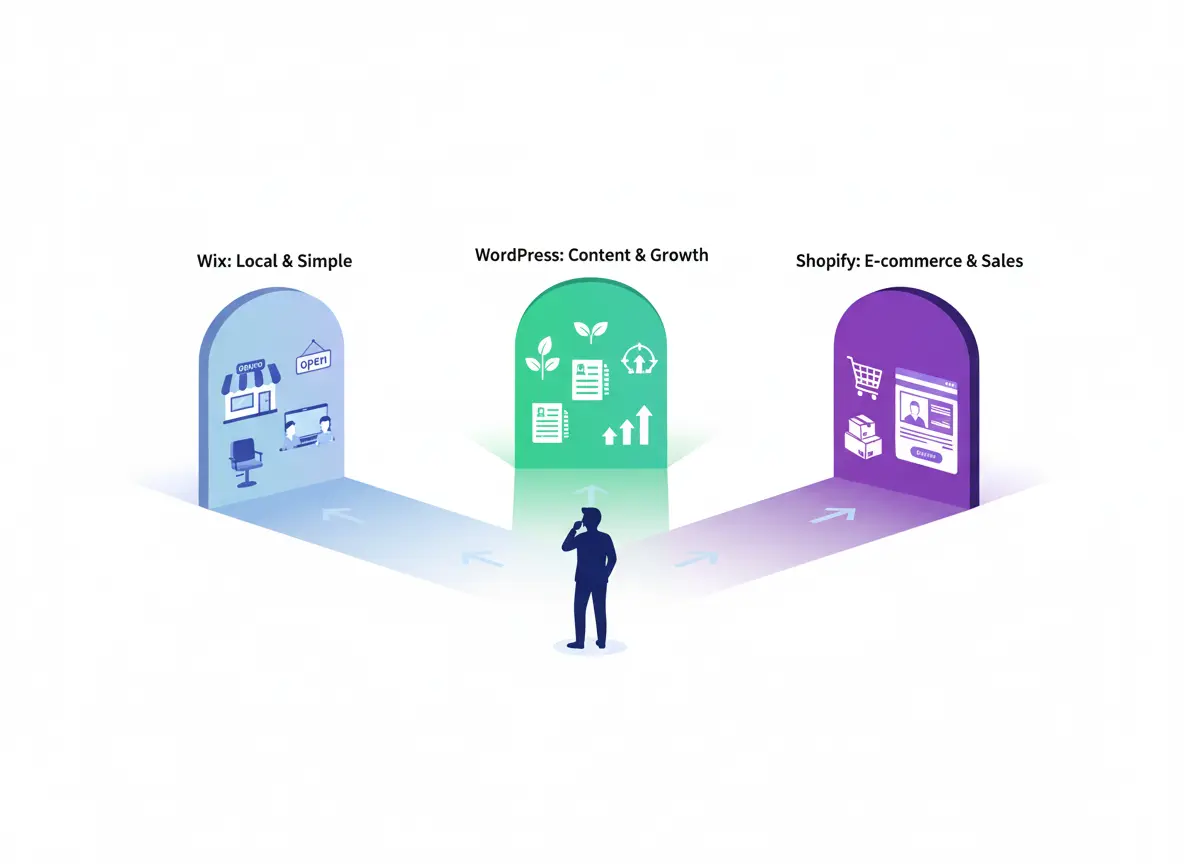
☑ Wix has become known for its intuitive drag-and-drop builder, quick setup, and visual editing, perfect for beginners or businesses that value simplicity.
☑ WordPress, still the world’s most widely used CMS, offers unmatched flexibility, plugin extensibility, and control, making it a preferred choice for content-heavy sites, custom features, and long-term scalability.
☑ Shopify continues to dominate the e-commerce landscape, offering powerful selling tools, integrations, and performance for businesses that prioritize online sales.
Each platform is strong, but each serves a different purpose.
That’s where Pixwelz LTD comes in. We help business owners not only choose the right platform, but also design, customize, optimize, and scale their websites so that their digital presence grows alongside their business goals. Our role is to simplify the decision and support your success, no matter which platform you choose.
This guide will break everything down clearly, helping you understand which builder aligns best with your 2026 goals. Let’s get started.
Platform Overview
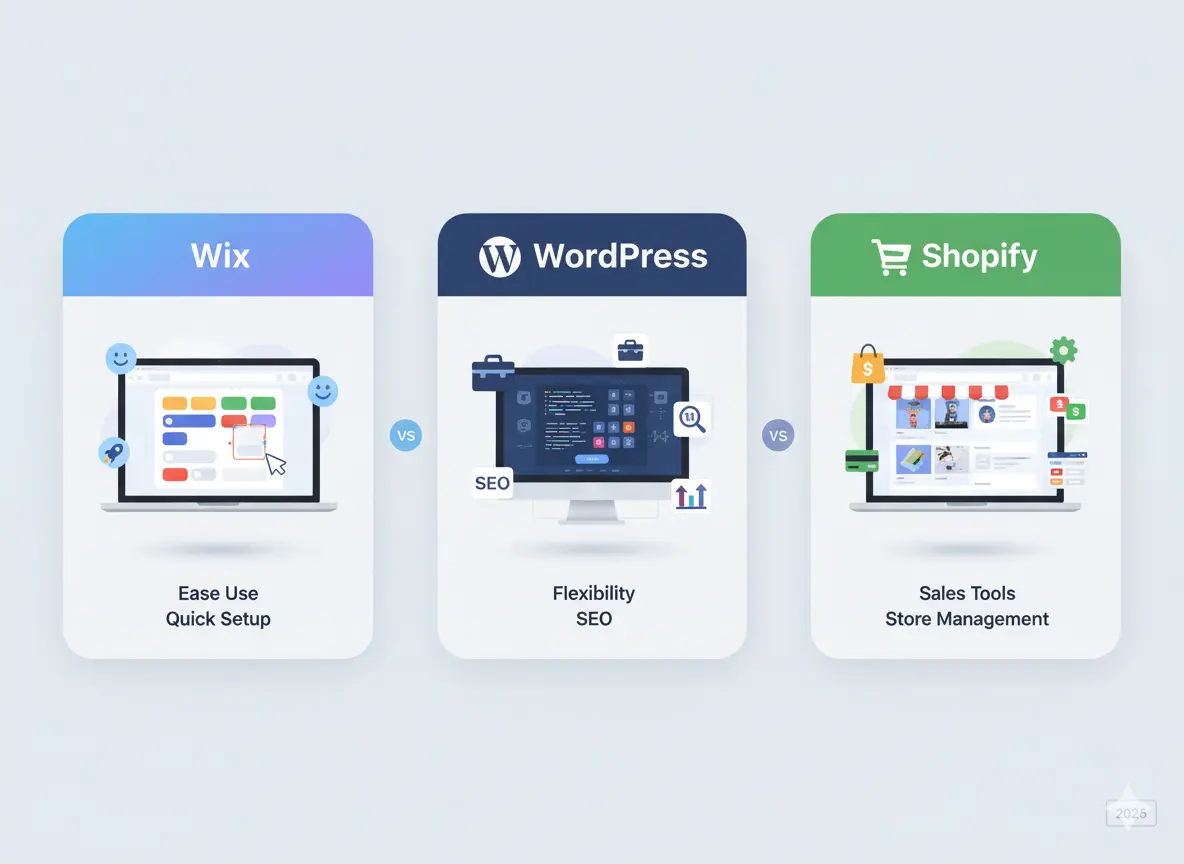
Before comparing features in detail, it’s important to understand what each platform is designed to do. While Wix, WordPress, and Shopify often get mentioned together, they were built with very different types of users and business goals in mind. Knowing these differences upfront helps business owners avoid costly mistakes and choose a platform that can grow with them.
Wix
Wix is an all-in-one website builder, meaning everything hosting, templates, security, and editor tools, is packaged together. It’s a platform built for simplicity, allowing users to drag, drop, and publish a website without touching a line of code.
This makes it especially appealing for:
☑ Beginners
☑ Small businesses needing a quick online presence
☑ Service providers, personal brands, and portfolio sites
Wix offers polished templates and built-in marketing tools, but its simplicity is also its limitation. As your business grows and requires deeper customization, complex integrations, or advanced functionality, Wix can become restrictive. It’s excellent for getting started, but not always ideal for scaling.
WordPress
WordPress powers over 40% of the web, and for good reason. It’s an open-source CMS known for its flexibility. Unlike Wix, WordPress requires separate hosting, but this also gives you complete control over performance, custom features, plugins, design frameworks, and functionality.
WordPress is ideal for:
☑ Blogs and content-heavy websites
☑ Growing businesses and agencies
☑ Custom or complex features
☑ Businesses focused on SEO and long-term scalability
If you want your website to evolve, add custom tools, grow into eCommerce, or scale content, WordPress offers the strongest foundation.
Shopify
Shopify is purpose-built for eCommerce. Everything in the platform revolves around one mission: helping businesses sell products online as efficiently as possible.
It includes:
☑ Product and inventory management
☑ Secure checkout
☑ Payment gateways
☑ Order tracking and fulfillment
It’s easy to set up, but it comes with a monthly subscription and, for many payment methods, transaction fees. Still, for online stores from small boutiques to high-scale retailers, Shopify provides one of the most reliable and scalable solutions available today.
Ease of Use & Learning Curve
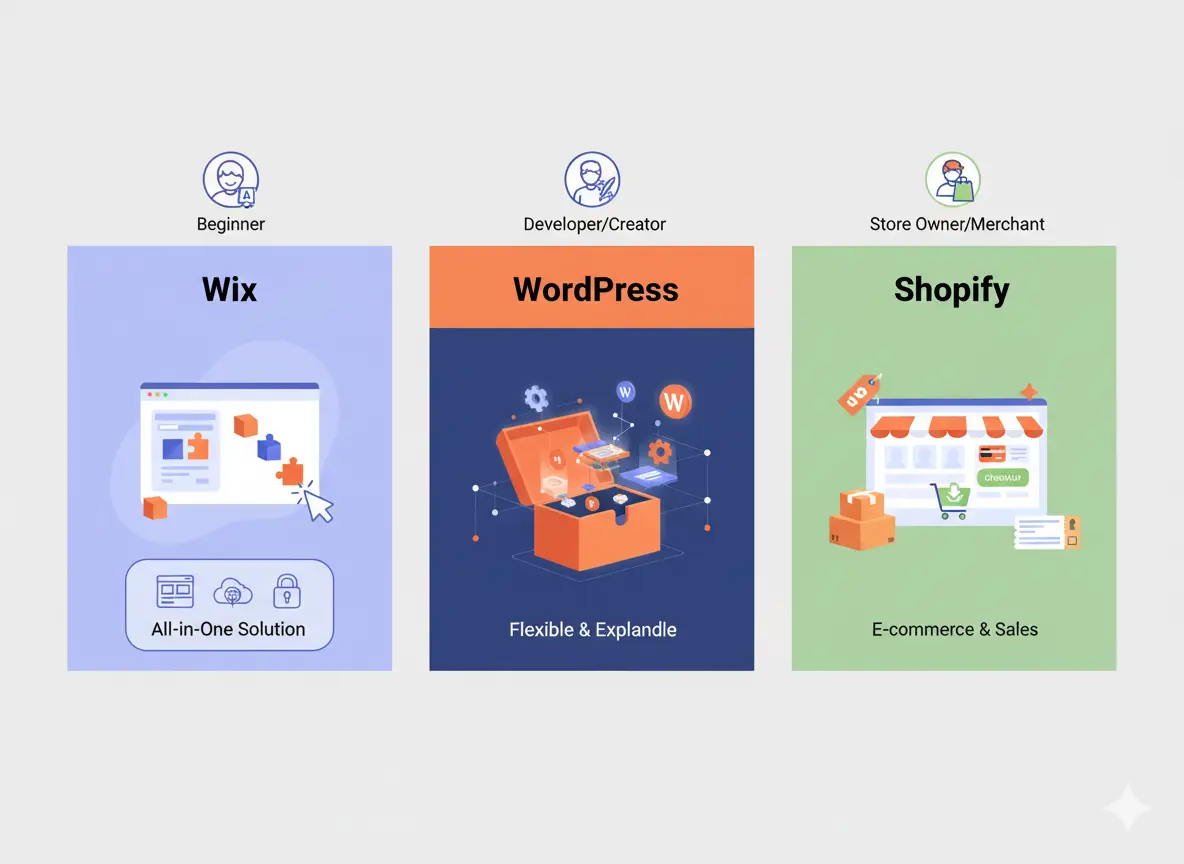
For many business owners, the first concern when choosing a platform is simple: “How easy is it to build and manage my website?”
Ease of use varies widely between Wix, WordPress, and Shopify, not because one is objectively better, but because each was designed for a different level of skill, control, and long-term maintenance.
Wix: The Easiest for Beginners
Wix is often considered the most beginner-friendly option because of its drag-and-drop visual editor. You can move elements anywhere, choose a template, make quick edits, and publish all without technical experience.
☑ Zero setup (hosting included)
☑ No coding required
☑ Simple interface
☑ Quick learning curve
For freelancers, personal brands, and small service businesses that just need a clean, functional site, Wix makes the process as smooth as possible.
Downside: As your website grows, the lack of deeper customization can become limiting.
Shopify: User-Friendly for eCommerce
Shopify also scores high on ease of use, especially for store owners who want to start selling quickly.
☑ Guided store setup
☑ Pre-designed themes
☑ Clearly organized dashboard
☑ Built-in product, inventory, and payment tools
You don’t need technical knowledge to run an online store. Shopify takes care of security, checkout, and performance behind the scenes.
Downside: Custom changes often require apps or developer help, and design flexibility is more structured compared to Wix or WordPress.
WordPress: Most Powerful, Slightly Steeper Learning Curve
WordPress is not difficult, but it is more involved than Wix or Shopify because it’s a fully customizable system.
☑ You choose your hosting
☑ Install themes and plugins
☑ Configure settings
☑ Build pages with editors like Elementor, Gutenberg, or Divi
This flexibility is the reason WordPress powers some of the world’s largest and most complex websites. Once properly set up, managing content becomes straightforward.
Pixwelz Talking Point
While Wix and Shopify are easier at the start, WordPress offers the best long-term control and scalability, especially when configured by a professional team like Pixwelz.
We help clients bypass the technical setup, so they get all the benefits of WordPress without the complexity.
Design & UX Flexibility
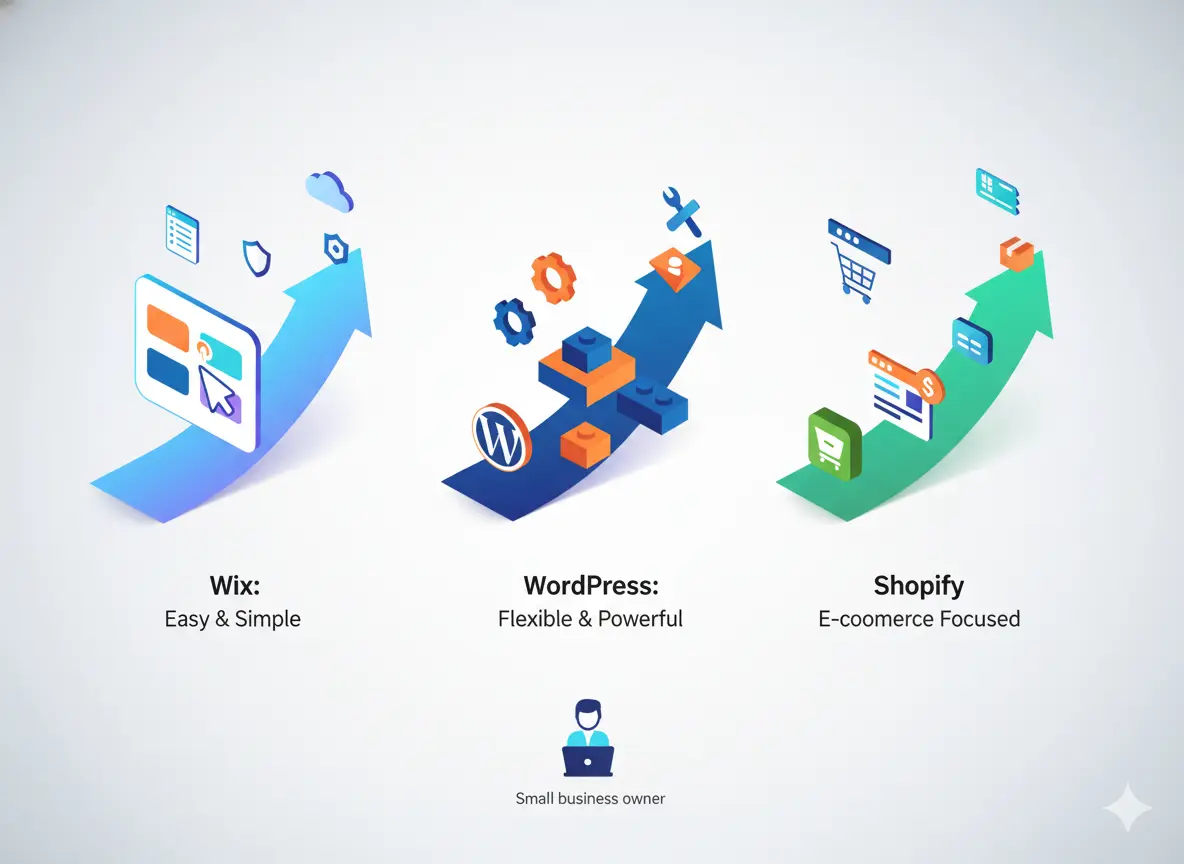
A website’s design and user experience (UX) play a direct role in how customers perceive your brand. Whether you need a simple brochure site or a highly customized digital experience, each platform offers different levels of creative control and design freedom.
Wix: Fast, Visual, and Beginner-Friendly
Wix is known for its template-driven, drag-and-drop editor, making it easy to create visually polished websites quickly. You can customize layouts, colors, images, and text without any technical knowledge.
Strengths:
☑ Large library of attractive templates
☑ True drag-and-drop editing
☑ Quick to launch with minimal setup
☑ Ideal for portfolios, personal brands, and small businesses
Limitations:
Wix’s flexibility has boundaries. While great for small to medium-sized sites, it becomes less adaptable when you need complex layouts, custom UX logic, or advanced integrations.
Shopify: Clean, Structured, and Commerce-Focused
Shopify themes are designed around one primary goal: driving online sales. Their layouts prioritize product presentation, intuitive navigation, and fast checkout experiences.
Strengths:
☑ Polished eCommerce-ready templates
☑ Mobile-first design
☑ Streamlined user experience for shoppers
Limitations:
Design customization is more structured. For bigger changes, you often need custom code, apps, or Shopify’s Liquid templating system, which may require developer support.
WordPress: Maximum Creative Control
WordPress offers the highest level of design and UX flexibility. With thousands of themes, page builders, and custom development capabilities, nearly any design vision can be achieved from minimalist landing pages to complex, interactive websites.
Strengths:
☑ Unlimited design possibilities
☑ Full control over layout, branding, and UX
☑ Works with advanced page builders (Elementor, Gutenberg, Divi)
☑ Suitable for scalable, brand-focused websites
Limitations:
The flexibility requires proper setup, hosting, theme optimization, and performance tuning, which can be technical for beginners.
Key Takeaway
WordPress gives the most creative freedom and long-term UX control. Wix and Shopify are faster to launch but offer less design flexibility overall.
With professional help from Pixwelz, businesses get the best of both worlds: fast development where needed and deep customization when it matters for branding.
SEO & Performance
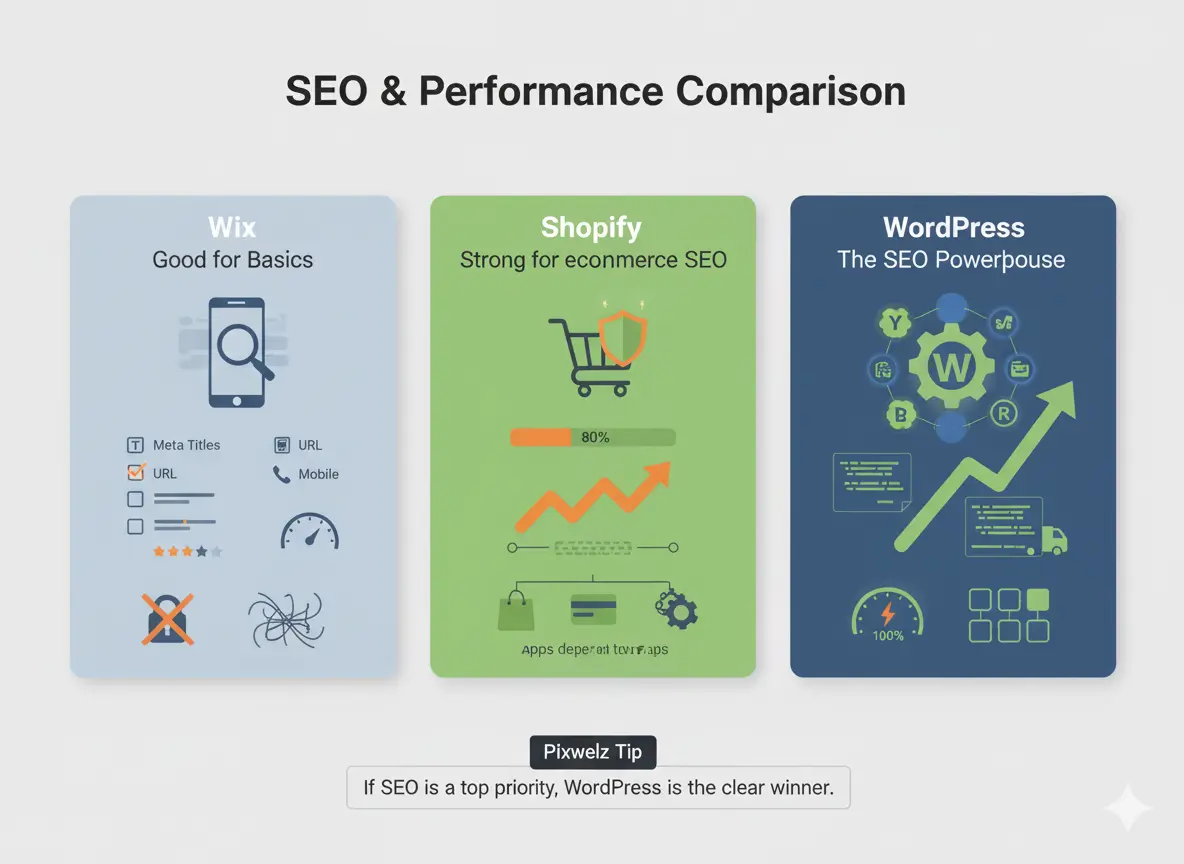
Your website’s visibility depends heavily on SEO and performance. While all three platforms support search optimization to some extent, the depth and flexibility vary significantly, and this is where many business owners start to see major differences.
Wix: Good for Basics
Wix has improved its SEO tools over the years, and it now includes features such as:
☑ Custom meta titles and descriptions
☑ Basic URL control
☑ Mobile optimization
☑ Built-in performance enhancements
For small websites or local businesses, this is often enough. But when you need advanced technical SEO, custom schema, structured site architecture, or performance tuning, Wix has limitations that can impact long-term growth.
Shopify: Strong for eCommerce SEO
Shopify performs well for online stores, offering:
☑ Fast product page loading
☑ Clean URL structures
☑ SSL and security built-in
☑ SEO-friendly themes
However, Shopify comes with restrictions: limited control over URL paths, rigid site architecture, and reliance on apps for certain SEO functions. It’s solid for retail SEO, but not ideal for content-heavy or deeply optimized websites.
WordPress: The SEO Powerhouse
WordPress is widely regarded as the best SEO platform, and for good reason. As an open CMS, it provides complete control over:
☑ Technical SEO
☑ Site architecture
☑ Page speed optimization
☑ Schema markup
☑ Custom meta settings
☑ Plugin-based enhancements (RankMath, Yoast, etc.)
This is why WordPress dominates search-driven industries, such as blogging, affiliate marketing, publishing, and businesses that require organic growth.
Pixwelz Tip
If SEO is a top priority, WordPress is the clear winner, especially when optimized by professionals.
At Pixwelz, we fine-tune WordPress sites for speed, structure, and search performance to help businesses maximize long-term visibility.
Cost & Scalability
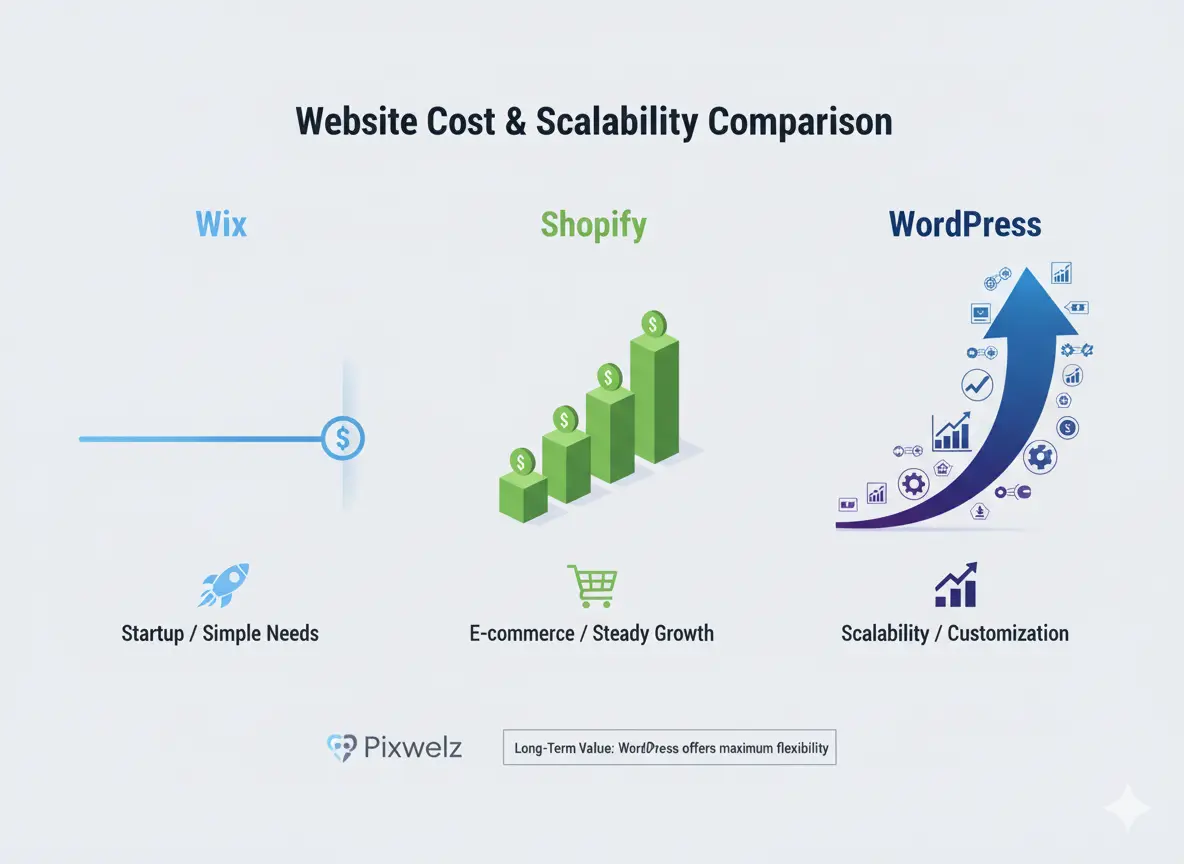
Choosing a website platform isn’t just about today; it’s about what your business can sustain as it grows. Each platform has a different cost structure and long-term scaling potential.
Wix: Budget-Friendly for New Businesses
Wix is one of the most affordable ways to get online quickly.
☑ Fixed monthly pricing
☑ Hosting included
☑ No surprise costs
☑ Great for freelancers, small service businesses, and personal brands
However, when you outgrow Wix’s features, you may need to migrate, which can increase your long-term costs.
Shopify: Predictable Monthly Costs for eCommerce
Shopify uses a subscription model and includes hosting, security, checkout, and eCommerce tools.
☑ Monthly plans
☑ Additional app costs
☑ Transaction fees (unless using Shopify Payments)
☑ Scales well for growing stores
If your business relies heavily on online sales, Shopify’s cost structure is justified. But for non-eCommerce websites, it’s usually overkill.
WordPress: Most Scalable & Cost-Efficient Over Time
WordPress can be inexpensive at the start and extremely powerful as you scale.
Costs typically include:
☑ Hosting (shared, VPS, or managed)
☑ Premium themes or plugins (optional)
☑ Occasional development or maintenance costs
Despite these variables, WordPress offers the best long-term value because you are not tied to platform limitations, high transaction fees, or rigid pricing tiers.
For businesses focused on growth, WordPress delivers the most freedom at the lowest lifetime cost.
Key Insight
☑ Wix: Ideal for startups and individuals
☑ WordPress: Most scalable and cost-efficient long-term
☑ Shopify: Best value for growing online stores
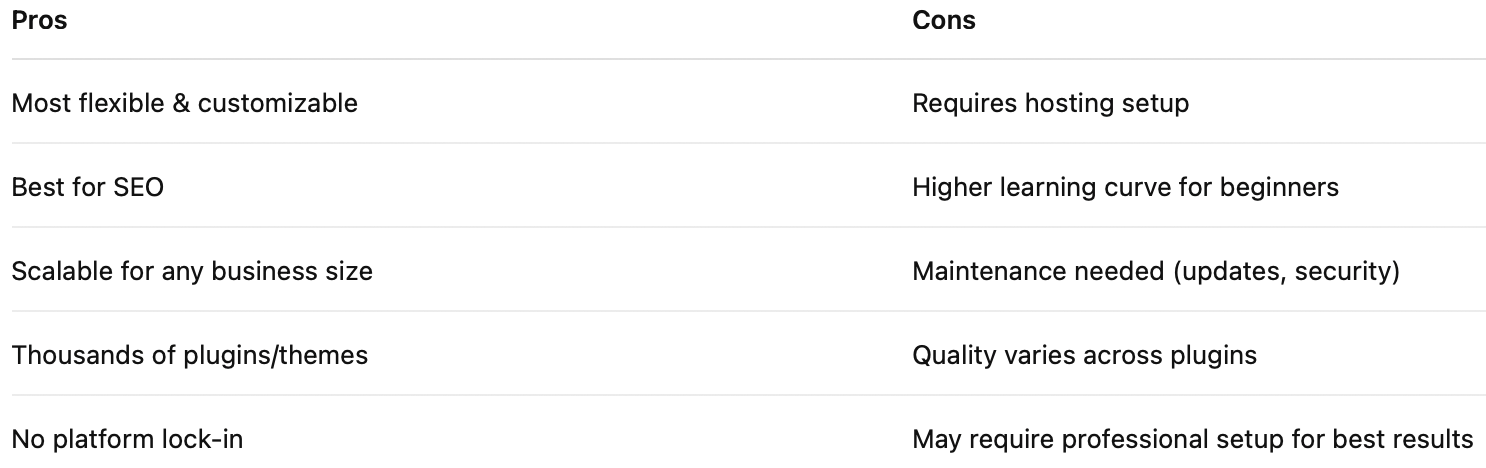
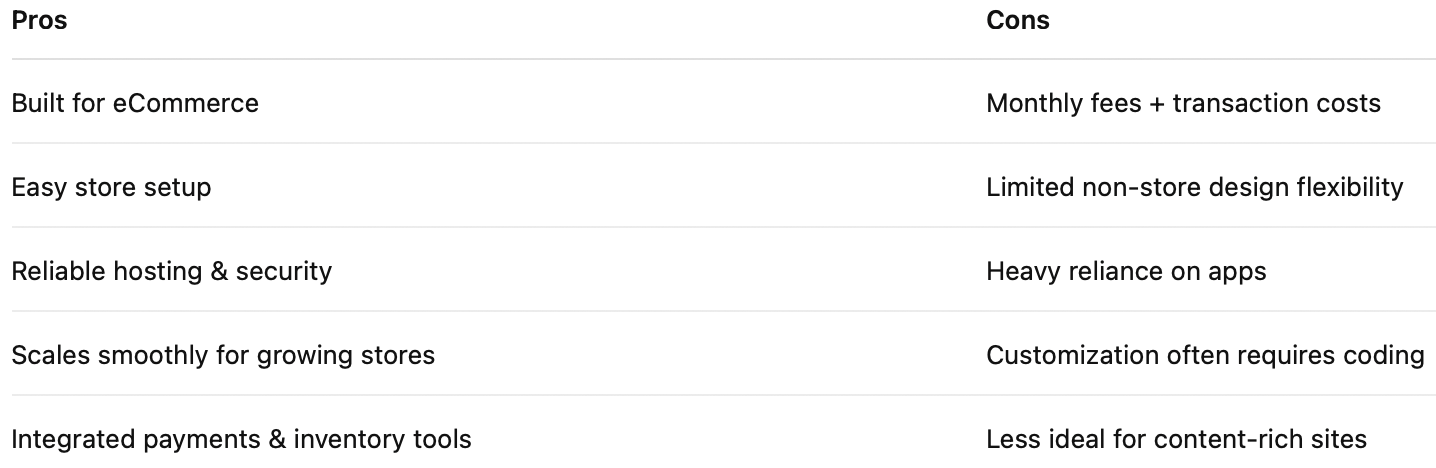
Pros & Cons Summary Table
Below is a clean, skimmable summary of each platform’s strengths and limitations.
Wix

WordPress
Shopify
Recommendations by Use Case
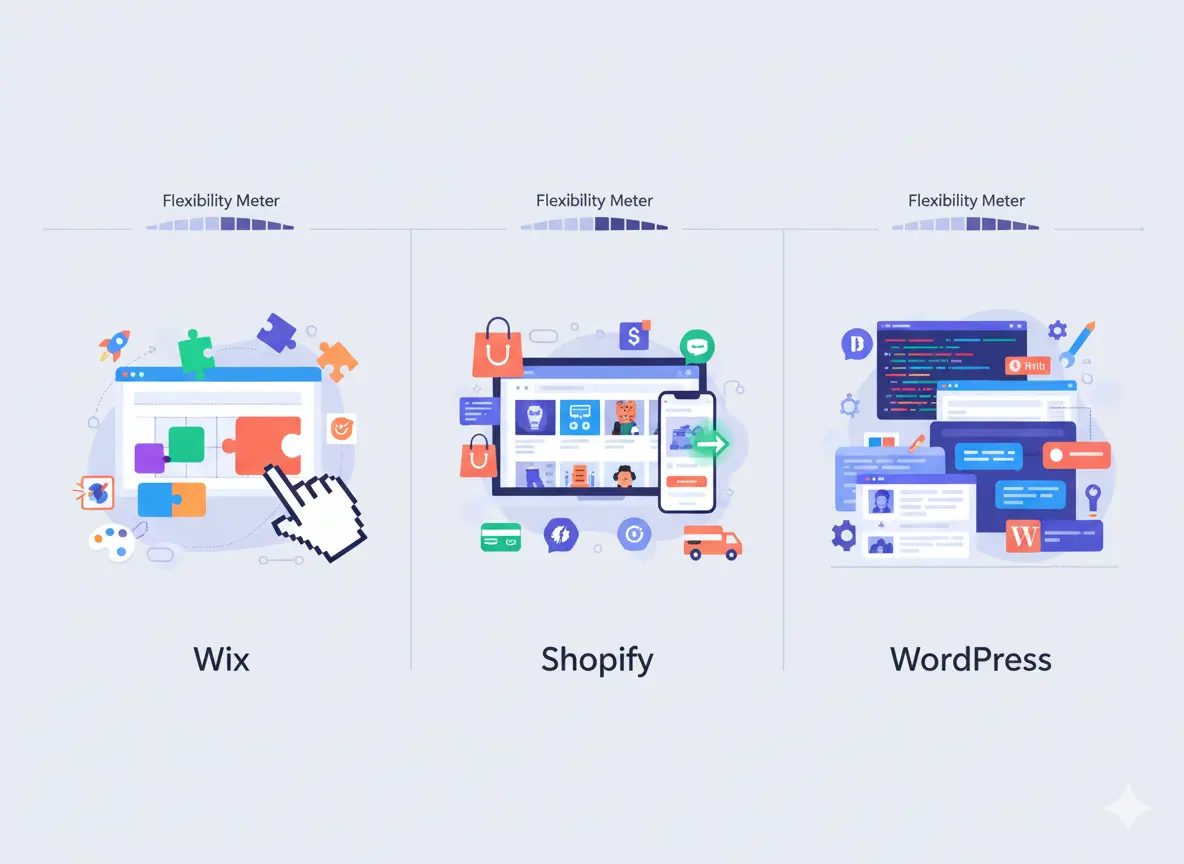
Choosing the right platform becomes much easier when you focus on your specific business goals. Each builder excels in a different area, and aligning your needs with the right tool can save you time, money, and frustration in the long run. Here’s a clear breakdown to help you decide where Wix, WordPress, or Shopify fits best.

Best for Small Businesses & Service Providers - Wix
Choose Wix if you want to launch quickly with minimal technical work.
Ideal For:
☑ Personal brands, coaches, freelancers
☑ Small service-based businesses (salons, studios, local services)
☑ Simple portfolios or brochure-style websites
☑ New entrepreneurs who want a no-fuss setup
Why:
Wix delivers speed, simplicity, and attractive templates straight out of the box. You can have a functional site in a day, perfect for early-stage businesses that need a clean, professional presence without complexity.
Best for Content-Driven Websites & Long-Term Growth - WordPress
Choose WordPress if SEO, flexibility, and scalability are your priorities.
Ideal For:
☑ Blogs, online magazines, and content-heavy websites
☑ Growing businesses and agencies
☑ Companies needing custom features or advanced integrations
☑ Startups planning long-term expansion
Why:
WordPress offers unmatched design, development, and SEO freedom. If you’re building an online presence meant to evolve, WordPress provides the strongest foundation, especially when configured and optimized by experts like Pixwelz.
Best for eCommerce Brands & Online Stores - Shopify
Choose Shopify if selling products is your core business.
Ideal For:
☑ New and established eCommerce stores
☑ Product-focused startups
☑ Retailers expanding into online sales
☑ Businesses needing reliable inventory, checkout, and fulfillment tools
Why:
Shopify is built specifically for e-commerce. From secure checkout to inventory tracking, it handles everything seamlessly, allowing you to focus on marketing and growth rather than technical management.
Final Pixwelz Recommendation
If you’re unsure which platform fits your business, Pixwelz LTD can help you choose, design, and scale the right solution. Whether it’s a clean Wix site, a powerful WordPress build, or a fully optimized Shopify store, we guide you from platform selection to long-term growth.
Recap
Choosing the right website platform in 2026 isn’t just a technical decision; it’s a strategic one. Wix, WordPress, and Shopify each bring something valuable to the table, but the best choice depends entirely on your business model, growth plans, and long-term goals.
☑ Wix is perfect for simplicity. If you want a clean, no-stress website that’s fast to launch and easy to manage, it delivers exactly that.
☑ Shopify remains the strongest option for businesses focused on e-commerce. Its built-in sales tools, secure checkout, and scalable infrastructure make it ideal for online stores of any size.
☑ WordPress stands out for flexibility, SEO strength, and long-term scalability. If you want a website that can evolve as your brand grows from content to custom features to advanced integrations, nothing beats it.
But most business owners don’t just need a platform.
They need guidance, strategy, and a team that understands how to translate their goals into a digital experience that actually converts.
That’s where Pixwelz LTD comes in.
Whether you’re launching your first website, rebuilding an outdated one, or preparing to scale your online store, Pixwelz helps you choose the right platform and then turns it into a high-performing asset for your business. From design and development to SEO, performance, and ongoing support, we handle the technical side so you can focus on growth.
.svg)
.svg)
.svg)
.svg)