In 2026, the website-building landscape is shifting faster than ever. What used to be a simple choice between a few DIY platforms has evolved into a competitive ecosystem shaped by AI-powered design tools, advanced SEO capabilities, and rising expectations for seamless user experience. Business owners are no longer just looking for a place to “build a site”; they’re searching for platforms that can scale, convert, and support long-term growth.
This report uncovers the biggest shifts in website builders for 2026 and highlights what business owners should consider before choosing a platform. Whether you’re comparing Wix, WordPress, or Shopify, or simply deciding how to future-proof your online presence, these insights can help you save time, avoid costly mistakes, and make a smarter, more strategic decision for your brand.
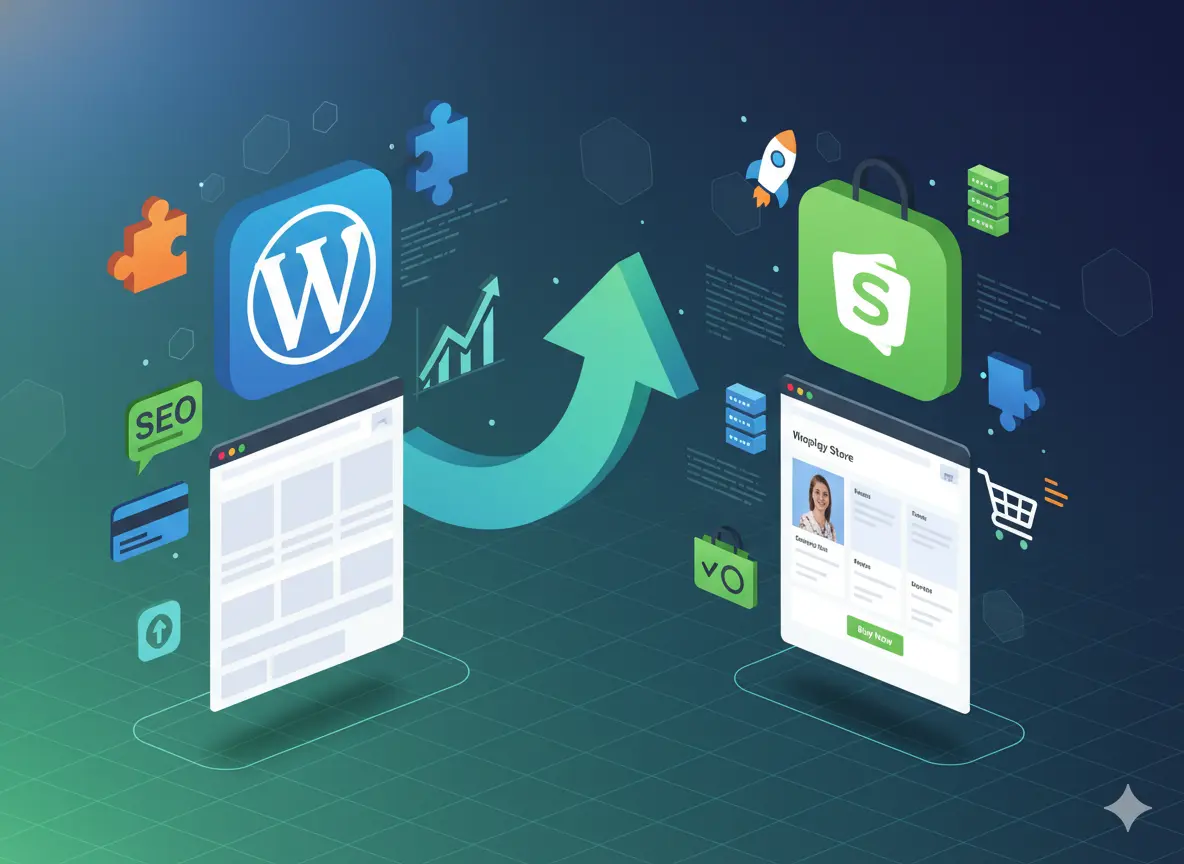
Trend #1 - WordPress & Shopify Dominate the Professional Website Market
Key Facts & Data
☑ WordPress powers over 40% of all websites on the internet, making it by far the most widely used website platform.
☑ Shopify continues to be the fastest-growing platform in the e-commerce sector, with usage growing significantly year-over-year.
☑ Both platforms lead because they offer scalability (small blogs to enterprise-level portals), wide integrations (plugins, payment gateways, marketing tools), and strong SEO flexibility (control over URLs, metadata, speed optimization).
☑ There is a clear migration trend, many users shift from DIY website-builders (template-based, limited customization) to more professional, managed WordPress or Shopify setups, particularly as their business and traffic grow.
Why Businesses Prefer WordPress & Shopify
☑ The large ecosystem of themes, plugins/apps, and developer support makes customizations easier without starting from scratch.
☑ Better performance, security, and optimization capabilities compared to many simpler DIY builders.
☑ Enhanced flexibility: ability to scale the website over time as business needs change (adding e-commerce, blog, custom integrations, marketing automation, multi-language support, etc.)
☑ SEO: full control over technical SEO settings, clean URLs, speed, and mobile optimization is critical for visibility and growth.
What This Means for 2026 & Beyond
☑ As competition intensifies and web standards rise, business owners increasingly treat their website as a long-term strategic asset, not just a placeholder.
☑ Platforms like WordPress and Shopify dominate because they support growth, not just launch. They give entrepreneurs the flexibility to evolve.
☑ The “DIY-to-pro” migration from builders like simpler page-template tools to managed WordPress or Shopify is likely to accelerate.
Trend #2 - The Decline of “DIY” Website Builders for Growing Businesses

In 2026, the narrative is shifting. DIY builders (such as Wix, Squarespace, and Weebly) remain popular for quick launches and one-person projects; however, but business owners with growth objectives increasingly find those platforms limiting, to the point where migrations and managed rebuilds are becoming common. Below, I’ve compiled current evidence, clear signals, and practical criteria for determining when a business has outgrown a DIY builder.
Key Evidence & Interpretation
☑ Large DIY vendors are still financially healthy, but their market role is evolving. Wix reported continued revenue and product growth while pivoting to higher-end Studio and AI offerings, a sign the company is targeting more advanced users, not just one-page DIY sites.

☑ Market-share data shows WordPress and dedicated e-commerce platforms dominate the professional segment; simpler site builders occupy a smaller slice of the sites that matter for business scale and SEO. (W3Techs/BuiltWith summaries place WordPress at 43%+ of all sites, while Wix/Squarespace are much smaller individually)

☑ Practical signal demand for migration services is high. Numerous agencies and migration tools advertise Wix to WordPress or Wix to Shopify migrations, and platforms such as LitExtension, Cart2Cart, and boutique agencies publish migration case studies showing businesses moving for performance, SEO, and commerce reasons.

☑ We cannot find a reliable public source that exactly supports the claim “60% of business owners rebuild within 2 years.” I searched recent surveys and industry reports and did not locate a reputable, dated study that substantiates that specific number. Agency analyses often suggest 2–3 year refresh cycles for many sites, but this varies hugely by industry and business goals, so I recommend not using the 60% figure unless you can point to an internal survey or proprietary dataset.
Why Businesses Outgrow DIY Builders (short list)
☑ Customization & integrations limited plugin ecosystems and constrained APIs make complex marketing, CRM, or headless-CMS setups difficult.

☑ Performance & SEO control advanced technical SEO (caching, CDN configuration, fine-grained URL control, server-side rendering) is easier on WordPress/Shopify/managed platforms.

☑ E-commerce scale high-volume stores need inventory, checkout flexibility, multi-currency, and advanced apps, areas where Shopify (or WooCommerce on WordPress) scales better.

☑ Ownership & portability businesses often want full data ownership, lower platform lock-in, and fewer app fees, a major driver for migrations.

When to Outgrow a DIY Website Builder
Use this checklist. If you answer “yes” to any of these, it’s time to consider upgrading to a managed WordPress, Shopify, or custom solution:
1. You need complex integrations (ERP/CRM/booking/payments) or custom APIs.
2. Page speed, Core Web Vitals, or SEO are affecting rankings and conversions.
3. Your product catalogue, traffic, or transaction volume has grown substantially.
4. You need multi-language / regionalization or enterprise content workflows.
5. You want full control over hosting, backups, security policy, or advanced caching.
Trend #3 - UX-First Design Is Now the Standard
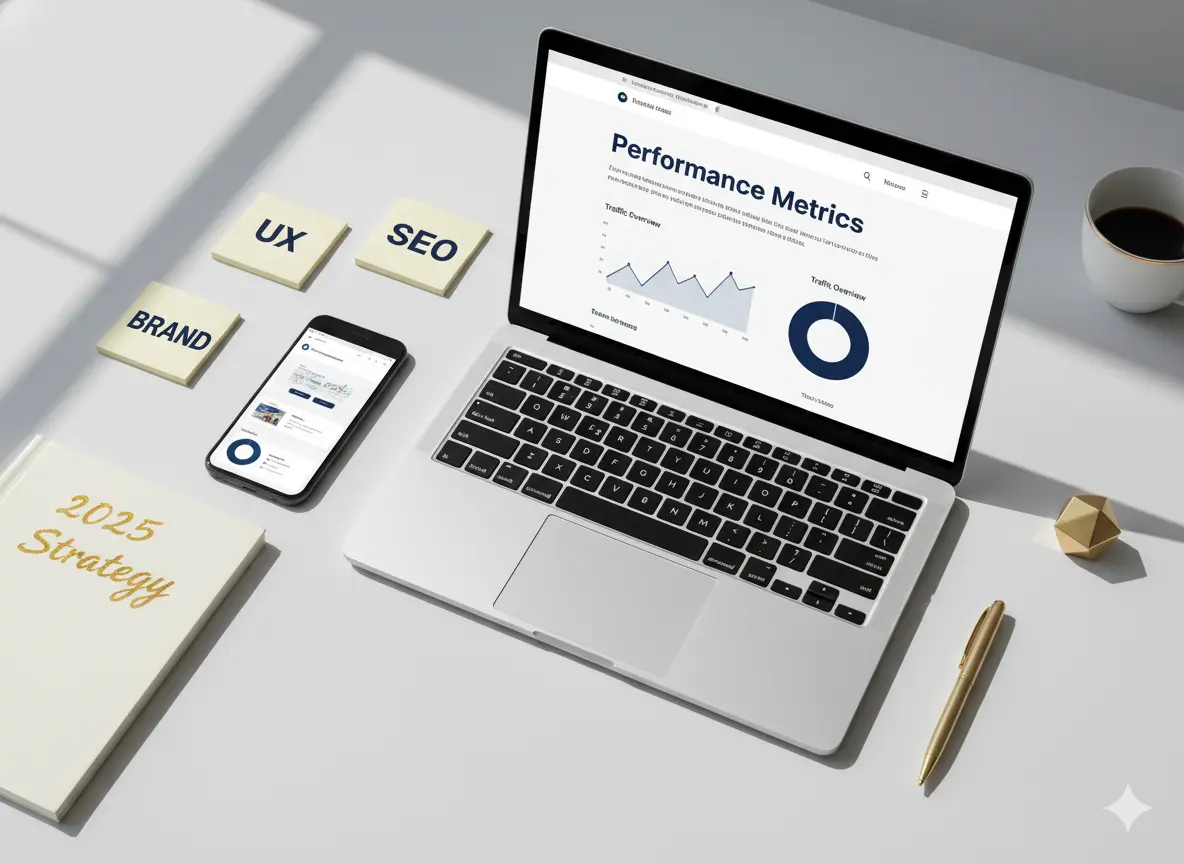
In today’s digital marketplace, first impressions count, and rarely do visitors linger long enough for a second look. Many UX experts and web-design agencies agree that users often judge a website within the first few seconds based on how clean, professional, and intuitive it feels.
At Pixwelz LTD, we’ve observed directly how even small UX improvements can pay off handsomely. Based on internal client work, we’ve seen that a 1-second improvement in UX flow, for example, faster load times, simpler navigation, clearer call-to-actions, can translate into a 7–10% boost in conversion rates.
When it’s time to invest in custom UX/UI:
☑ If your website feels generic or “templated,” with no clear brand identity;
☑ If you depend on conversions (sales, leads, sign-ups);
☑ If your content or product catalogue is growing;
☑ If navigation or user flow is getting complex;
☑ If performance, mobile experience, or site speed is critical.
In 2026, UX-first design isn’t optional; it’s a core requirement for businesses serious about conversion, growth, and long-term brand trust.
Trend #4 - SEO Limitations Are Pushing Businesses Off Basic Builders

As competition intensifies across every industry, SEO has shifted from a “nice to have” to a mission-critical growth engine. But most DIY website builders, while convenient, don’t offer the level of technical control required to rank competitively in 2026.
This is why many growth-focused brands are migrating to platforms like WordPress and Shopify, where technical SEO isn’t boxed in by platform restrictions. WordPress allows full control over metadata, speed configurations, schema markup, URL structures, and custom SEO workflows.
When a business should upgrade from a basic builder for SEO:
☑ Your rankings are plateauing despite strong content.
☑ You can’t improve Core Web Vitals due to platform limits.
☑ You need a custom schema, multilingual SEO, or advanced indexing control.
☑ You rely heavily on organic search for leads or sales.
☑ You need to scale content or product pages without structural limitations.
Trend #5 - The Rise (and Reality) of AI Website Builders
%20of%20AI%20Website%20Builders.webp)
AI is now one of the biggest marketing keywords in the website-builder space. Wix, Squarespace, GoDaddy, and dozens of new startups promote “AI website builders” that promise instant websites created in minutes.
In 2026, the real takeaway is this: AI is an assistant, not a strategist. It can accelerate workflows, streamline content drafts, speed up wireframes, and help generate page structures. But it cannot replace UX expertise, lived business understanding, or brand storytelling, all essential to conversion-focused websites.
“AI can build a layout. It can’t build trust.”
Trend #6 - The Switch Trend: From DIY to Professional Websites
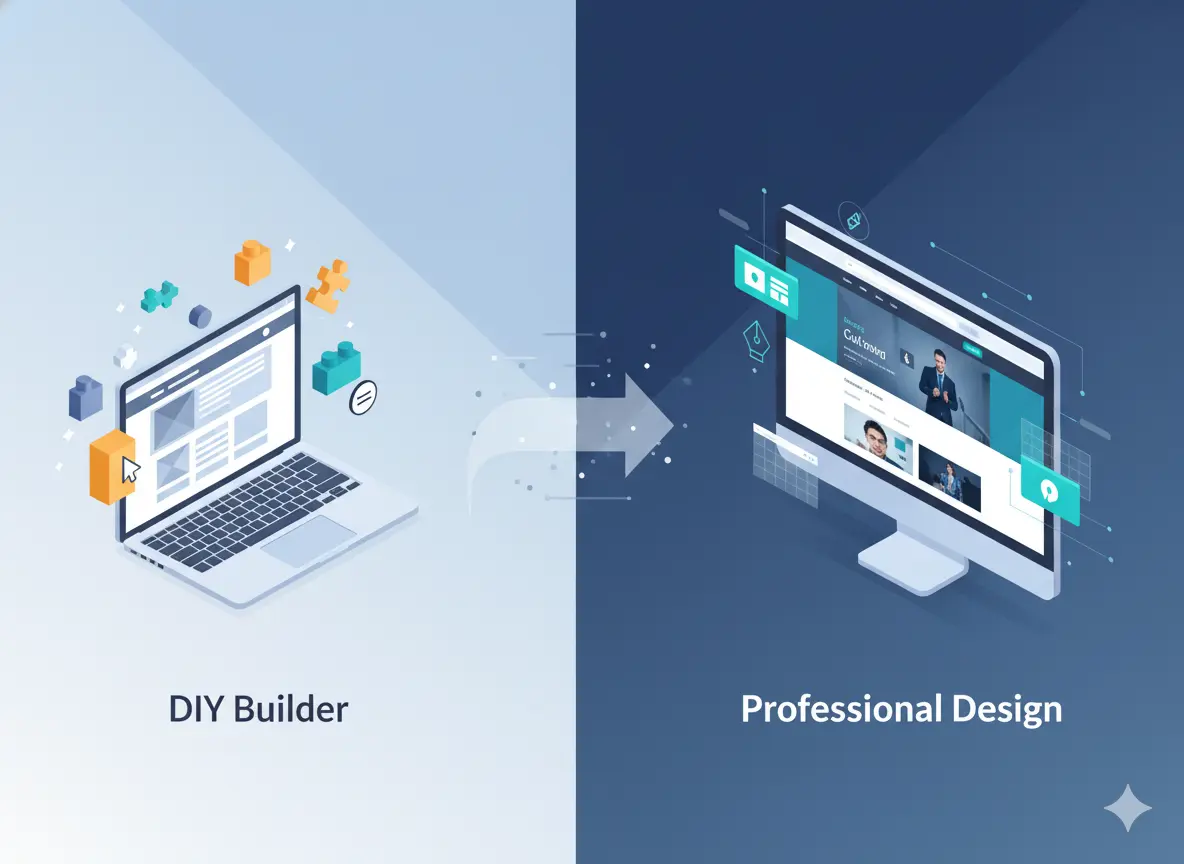
A clear pattern has emerged over the past few years: businesses that started with quick DIY website builders are now rebuilding their sites on more professional platforms. What began as a side trend has become a mainstream movement, especially among companies looking to scale, improve conversions, or build a more trustworthy brand presence.
Agencies like Pixwelz LTD are seeing a steady increase in projects where clients intentionally move away from DIY platforms toward WordPress, Shopify, or custom UX/UI builds.
These migrations usually happen for three major reasons:
☑ Speed & performance passing Google Core Web Vitals and improving ranking potential.
☑ UX & conversions designing intentional user flows that DIY templates can’t support.
☑ Brand alignment, creating a unique visual identity instead of relying on cookie-cutter layouts.
Industry Insights - The Website Builder Market Breakdown
The website-builder market in 2026 is undergoing quiet but significant consolidation. While dozens of builders still exist, real momentum is concentrating around a few major platforms that offer the scalability, integrations, and performance businesses now demand.
What we’re seeing across the industry is a split:
☑ DIY builders (Wix, Squarespace, GoDaddy) attract new entrepreneurs who want speed and simplicity.
☑ Professional platforms (WordPress, Shopify) continue to dominate business websites, especially for companies that rely on SEO, conversions, and custom features.
The reason is simple growth eventually requires more than drag-and-drop design. Businesses want deeper integrations with CRMs, automation tools, analytics suites, multi-language systems, e-commerce engines, and performance frameworks.
This consolidation isn’t about popularity; it’s about practicality. Businesses are choosing platforms that can integrate with the tools they already use (HubSpot, Zapier, Stripe, Make.com, ERP systems) and support the tools they plan to use in the future.
For growing brands, this shift matters: choosing the right platform today determines how easily you can expand tomorrow.
Cost Insights - DIY Builders vs Professional Websites

When comparing website platforms, cost is often the first factor business owners consider. On the surface, DIY builders appear to be the most affordable option, but the real cost picture becomes clearer once you factor in long-term growth, SEO performance, and the hidden price of redesigns. Below is a breakdown of typical costs across the most common website paths.
DIY Website Builders (Wix, Squarespace, GoDaddy)
Most DIY platforms charge a monthly subscription fee that covers hosting, templates, basic SEO tools, and drag-and-drop editing.
Typical Cost:
☑ $20–$50/month, depending on the plan and features
☑ Additional costs for premium apps, booking tools, e-commerce add-ons, or storage upgrades
☑ Hidden cost: Your time for design, editing, troubleshooting, content building, and ongoing updates can take dozens of hours to maintain
WordPress (Professional Build)
WordPress remains the most flexible and scalable option for growing businesses. While the software itself is free, a professional build requires setup, design, custom UX, optimization, and ongoing hosting.
Typical Cost:
☑ $1,500–$5,000+ for a professional design and setup (industry standard range)
☑ $20–$50/month for quality hosting (managed hosting can be higher)
☑ Optional plugin licenses depending on SEO, security, and performance needs
A professional WordPress build delivers far more control, speed optimization, custom branding, and long-term scalability, making it a future-ready investment rather than a short-term patch.
Shopify (Professional E-Commerce Setup)
Shopify offers one of the strongest infrastructures for online stores, but a professional setup is still recommended for brand alignment, UX, and conversion optimization.
Typical Cost:
☑ $29–$299/month for Shopify plans
☑ Professional design setup varies based on store size, features, and integrations
☑ Apps may add $20–$200/month depending on complexity
Shopify is more expensive than DIY builders, but it is optimized for serious e-commerce growth.
The Real Conclusion: ROI, Not Monthly Cost
While DIY builders look cheaper upfront, they often result in:
☑ Slower site speed → fewer conversions
☑ Limited SEO → lower visibility
☑ Template restrictions → poor brand differentiation
☑ Rebuilds within 1–2 years → higher long-term cost
Professional websites (WordPress or Shopify) cost more at launch, but they typically pay for themselves through better performance, improved SEO, higher trust, and stronger conversion rates.
Recommendations - Which Platform Fits Which Business Type
Choosing the right website platform isn’t about trends; it’s about aligning your business model, growth stage, and long-term goals with the right technology. Every platform has strengths, but not every platform fits every business. In 2026, the smartest decision makers choose based on scalability, SEO depth, integrations, and how their website supports the customer journey.
For Early-Stage Startups & Small Service Providers
Best Fit: DIY Builders (Wix, Squarespace)
These platforms are ideal for simple websites that need to go live quickly. If your main goal is to establish an online presence with minimal technical complexity, a DIY builder is sufficient.
Choose DIY if you:
☑ Need a fast, low-cost launch
☑ Have a simple service offering
☑ Don’t require advanced SEO or integrations
☑ Want to manage everything yourself
For Growing Businesses That Rely on SEO & Content
Best Fit: WordPress (Professional Build)
WordPress excels when a business needs customization, content scalability, performance optimization, and full SEO control. It’s the top choice for brands that want to grow traffic, rank competitively, and build a long-term digital foundation.
Choose WordPress if you:
☑ Need strong SEO, speed, and technical flexibility
☑ Plan to publish content regularly
☑ Want custom UX/UI and rich brand storytelling
☑ Expect your site to expand over time
For E-Commerce & Online Retail Brands
Best Fit: Shopify
Shopify is the most powerful platform for product-based businesses, offering secure payments, global checkout features, and advanced e-commerce integrations.
Choose Shopify if you:
☑ Sell physical or digital products
☑ Need reliable inventory, shipping, and checkout tools
☑ Want a secure, fast, mobile-friendly store
☑ Prefer a platform built for scaling online sales
Final Guidance
There is no one-size-fits-all solution, but there is a right platform for every business, depending on your growth plans. Companies that choose strategically often avoid costly rebuilds and see faster ROI from their website investment.
Pixwelz helps match you to the right platform and handles full migration from strategy to launch.
Expert Insights - What Business Owners Should Do in 2026
As digital competition intensifies, business owners must think beyond templates, trends, or quick-launch tools. The most successful brands in 2026 will be those that view their website as a strategic asset, not just a page on the internet.
At the same time, choosing the right platform matters. In 2026, the winning formula isn’t DIY versus professional, it’s smart technology paired with professional customization. Builders like WordPress and Shopify offer powerful infrastructures, but their true potential is unlocked when guided by UX strategy, SEO expertise, and brand-led design.
“In 2026, trust and user experience are your best marketing tools.”
For business owners, the path forward is clear:
☑ Invest in a website that reflects real brand value.
☑ Prioritize speed, structure, and clarity over shortcuts.
☑ Use AI where it helps, but rely on strategy where it matters.
☑ Choose a platform that supports long-term growth, not just a quick launch.
The Future of Website Builders (and Your Next Step)
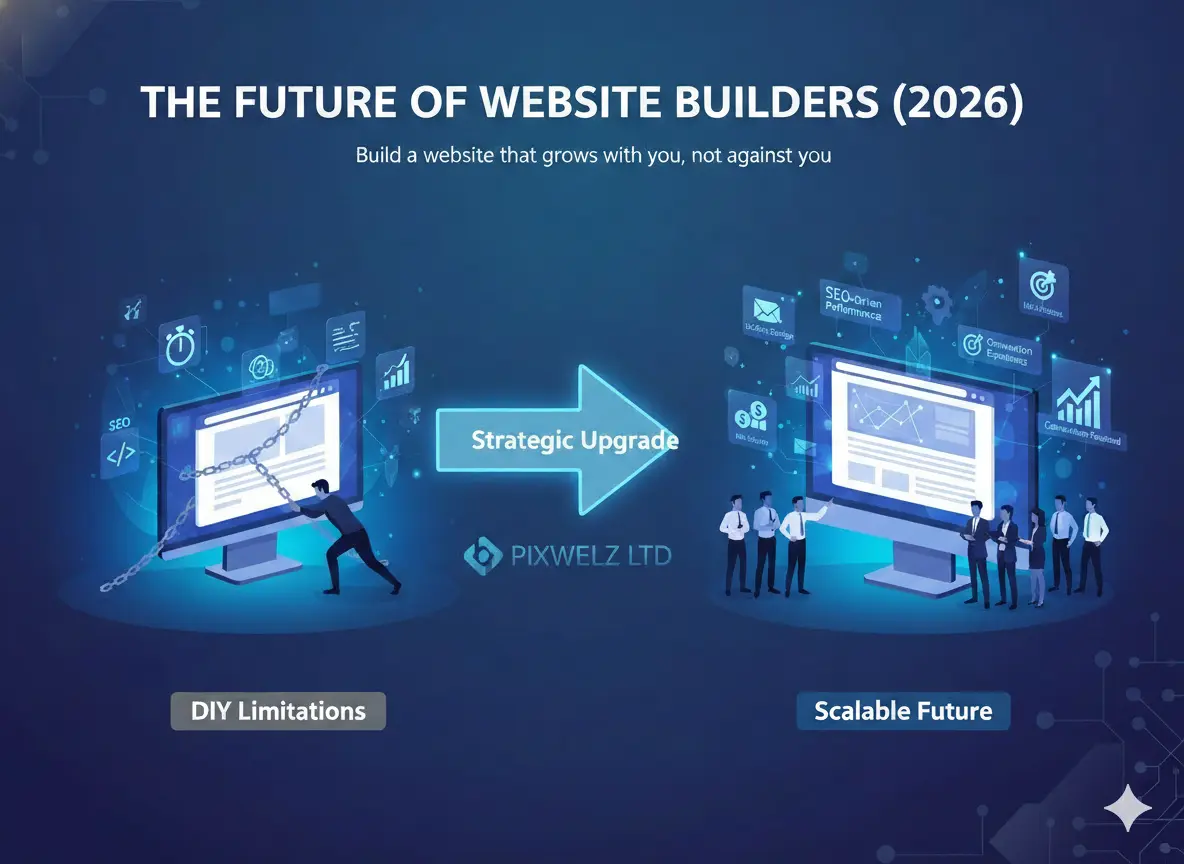
The website landscape in 2026 is defined by three undeniable shifts:
UX-first design, SEO-driven performance, and a clear movement from DIY websites to professional, scalable platforms. Business owners no longer have the luxury of treating their website as a simple digital placeholder.
The takeaway is simple: Don’t wait until your website slows your business down. If you’re already feeling constrained by templates, struggling with SEO, or planning to scale, now is the time to make a strategic upgrade.
At Pixwelz LTD, we help businesses choose the right platform, execute flawless migrations, and design conversion-focused experiences that match their brand and long-term goals. You’re moving from a DIY builder or building from scratch, our team ensures your next website is faster, stronger, and ready for the future.
Your next step? Build a website that grows with you, not against you.
.svg)
.svg)
.svg)
.svg)