Outsource UI/UX development services to access specialized expertise for digital product design without building every design capability in-house. UI/UX development services support research, user flows, wireframes, prototypes and interface design across the product design process.
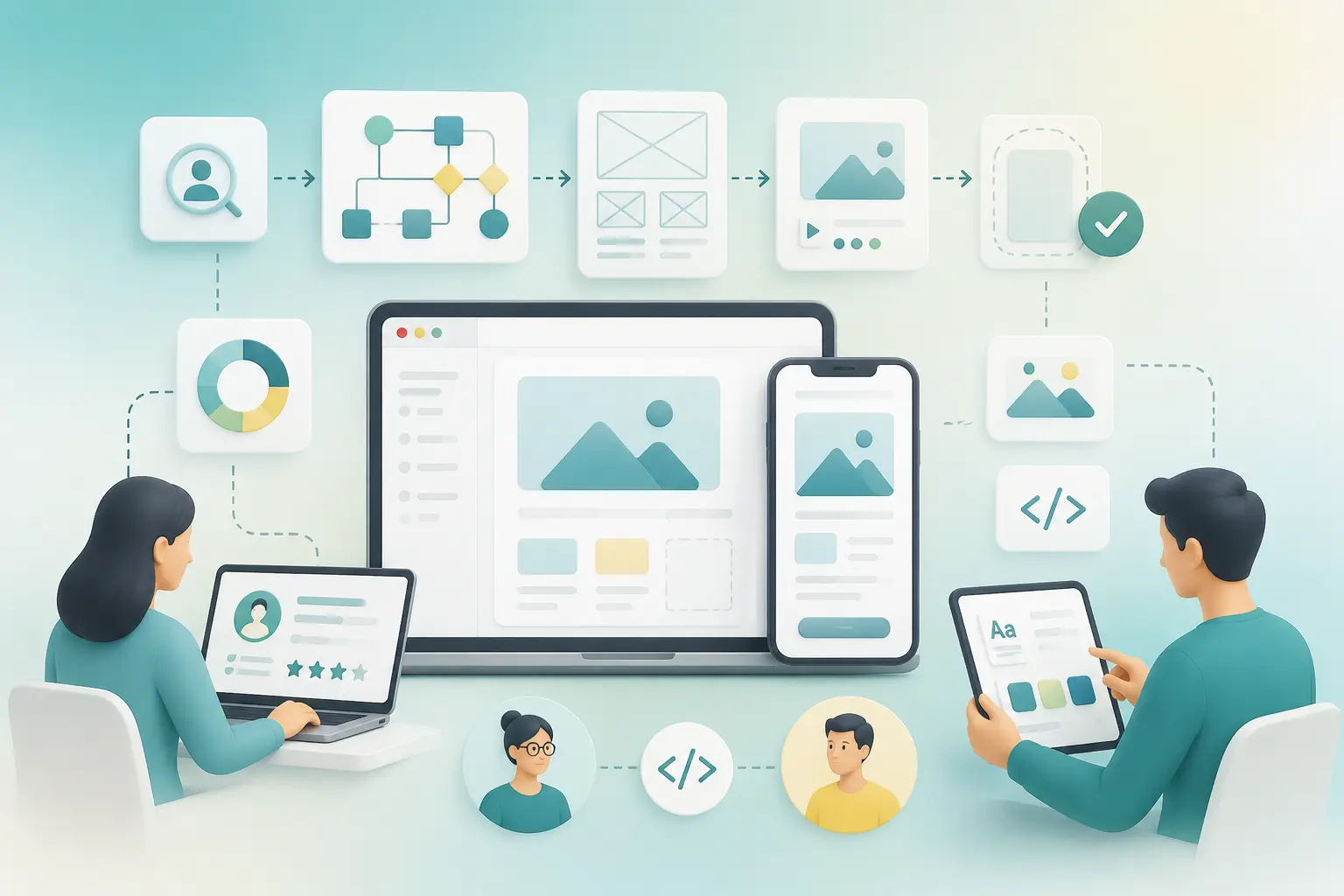
UI/UX development services begin with user research that identifies user needs, goals and problems. These services then create user flows that define product navigation, wireframes that establish structure and prototypes that test interactions before interface design moves toward development.
UI/UX development services use usability testing to identify interaction problems and improve the user experience before development. These services also create design systems that define reusable components, visual rules and interaction patterns for consistent product interfaces.
UI/UX development services support developer handoff through design specifications, assets and interaction details. These services also provide implementation support that helps development teams resolve design issues and maintain the approved user experience.
What are UI/UX development services?
UI/UX development services are professional services that combine user experience planning, interface design, usability validation and technical implementation to create effective digital products. UI/UX development services define how users navigate products, complete tasks and interact with visual elements such as layouts, typography, colors, buttons and icons.
UI/UX development services include user research, user journey mapping, wireframes, clickable prototypes and usability testing. These services then produce high-fidelity interface designs, design-system components, responsive layouts and developer-ready specifications.
UI/UX development services may also include design-to-code support, front-end implementation, accessibility improvements, usability audits, analytics-based optimization and post-launch iteration. The scope depends on the provider, while the core purpose remains the same: connect user needs, business goals and technical feasibility within one product experience.
What UI/UX services can be outsourced?
Businesses can outsource UI/UX services across the full product lifecycle, from user research and journey mapping to interface design, usability testing and post-launch support. The scope depends on product goals, technical complexity, timelines and in-house resources.
The commonly outsourced UI/UX services are listed below.
UX research: UX research identifies user needs through interviews, competitor analysis, persona development and usability studies.
User journey mapping: User journey mapping shows task flows and workflows to identify friction points.
Information architecture: Information architecture organizes content, features, navigation and screen hierarchies.
Wireframing: Wireframing defines product structure through low- or mid-fidelity layouts before visual design.
Prototyping: Prototyping creates interactive models that demonstrate and validate product flows.
UI design: UI design creates screens, visual layouts, typography, colors, icons and interactive elements.
Responsive design: Responsive design adapts interfaces for desktops, tablets, smartphones and different screen sizes.
Design systems: Design systems establish reusable components, patterns, guidelines and documentation for consistency.
Usability testing: Usability testing evaluates designs with users and identifies clarity, efficiency and accessibility issues.
UX audits: UX audits identify usability and conversion problems in existing websites or applications.
Developer handoff: Developer handoff provides design files, specifications, assets and implementation guidance.
Design QA and support: Design QA checks developed interfaces and supports post-launch refinements.
Why outsource UI/UX development services?
Businesses outsource UI/UX development services to access specialized expertise, accelerate delivery, control costs and improve digital product quality without building a large permanent design team. UI/UX development services also provide flexible support when internal design capacity cannot meet project demands.
The key benefits of UI/UX outsourcing are listed below.
Specialized Talent: Specialized talent gives businesses access to UX researchers, product designers, accessibility specialists and design-system experts.
Faster Delivery: Faster delivery helps teams move from research and wireframes to prototypes and final designs through established workflows.
Cost Control: Cost control can reduce recruitment, training, salary and software expenses for temporary or project-based design needs.
Flexible Capacity: Flexible capacity lets businesses increase design support for major projects and reduce support after delivery.
Fresh Perspectives: Fresh perspectives help external designers identify usability problems and challenge internal assumptions.
Product Quality: Product quality improves when research, usability testing and accessibility reviews identify issues before release.
Core Team Focus: Core team focus lets internal teams prioritize engineering, marketing, operations and business strategy while specialists manage UI/UX work.
When should a business outsource UI/UX design?
A business should outsource UI/UX design when it needs specialized expertise, faster delivery or temporary design capacity without hiring a permanent in-house team. Outsourcing works well for project-based work, specific product milestones and periods of high design demand.
A business may consider UI/UX outsourcing in the following situations:
New Product Launch: New product launch requires UX support for a website, mobile app, SaaS product or MVP.
Limited Internal Capacity: Limited internal capacity creates delays when existing designers cannot meet project demands.
Specialized Expertise: Specialized expertise provides access to UX research, accessibility, interaction design or design-system skills.
Product Redesign: Product redesign requires fresh design work to improve usability, conversion or an outdated interface.
Objective Review: Objective review gives a business an external assessment of an existing user experience.
Early Validation: Early validation helps teams test product ideas before they commit major development resources.
New Market Entry: New market entry creates a need for design expertise that reflects different user expectations.
Rapid Capacity Increase: Rapid capacity increase adds design support without a lengthy hiring process.
Limited Senior Support: Limited senior support provides experienced talent for a defined project or period.
What is the UI/UX outsourcing process?
The UI/UX outsourcing process is a structured workflow that moves from product discovery and research through information architecture, wireframing, prototyping, UI design, developer handoff and design QA. The process connects business goals, user needs and delivery requirements at each stage.
The typical UI/UX outsourcing steps are listed below:
- Project Discovery: Project discovery defines business objectives, user problems, platforms, technical constraints and priorities.
- Research and Analysis: Research and analysis examines users, competitors, analytics, customer feedback and existing usability issues.
- Information Architecture: Information architecture organizes content, navigation, features and user journeys.
- Wireframing: Wireframing establishes screen structure and core interactions through low-fidelity layouts.
- Prototyping and Testing: Prototyping and testing use interactive prototypes to evaluate concepts with users or stakeholders.
- UI Design: UI design creates high-fidelity screens, responsive layouts, visual styles and reusable components.
- Developer Handoff: Developer handoff provides design files, specifications, assets and implementation guidance.
- Design QA and Iteration: Design QA and iteration check the developed product and correct design inconsistencies before or after launch.
How much does UI/UX outsourcing cost?
UI/UX outsourcing can cost approximately $10,000 for a small MVP project to $300,000 or more for a complex enterprise platform. The final cost depends on project scope, platform count, research depth, testing requirements, revisions and developer support.
The common UI/UX outsourcing engagement models are listed below.
What affects UI/UX outsourcing costs?
UI/UX outsourcing costs depend on project scope, design complexity, platform count, research depth, expertise, timeline and engagement model. A larger scope increases design effort, while complex requirements add research, testing and implementation work.
The main factors that affect UI/UX outsourcing costs are listed below.
Project complexity: Project complexity increases cost when products require more screens, workflows or interactions.
Platform count: Platform count affects cost when teams design separate web, iOS, Android or desktop experiences.
Research depth: Research depth increases cost when projects require extensive user research and usability testing.
Expertise level: Expertise level affects rates based on specialist skills, industry knowledge and agency reputation.
Workflow complexity: Workflow complexity increases effort when products include multiple user roles, integrations or complex tasks.
Design system scope: Design system scope affects cost through component volume, documentation and reusable patterns.
Compliance requirements: Compliance requirements add design work for accessibility, security or regulatory needs.
Revision scope: Revision scope affects cost when projects require many review cycles or stakeholder approvals.
Delivery timeline: Delivery timeline can increase cost when teams must meet accelerated deadlines.
Engagement model: Engagement model determines whether the client pays by hour, project or monthly retainer.
Partner location: Partner location affects rates because regional design costs vary.
Support scope: Support scope affects cost when contracts include developer handoff, design QA or post-launch support.
How does UI/UX outsourcing compare with an in-house team?
UI/UX outsourcing provides flexible specialist capacity, while an in-house team provides direct control and deeper internal product knowledge. The better model depends on design demand, product strategy and the need for ongoing collaboration.
The main differences between UI/UX outsourcing and in-house teams are shown below.
How do you choose a UI/UX outsourcing partner?
Choose a UI/UX outsourcing partner by assessing relevant experience, portfolio quality, design expertise, communication practices, delivery history, pricing, security and post-launch support. The evaluation should match the partner's capabilities with the product's scope and technical needs.
The key factors for partner selection are listed below.
Relevant experience: Relevant experience shows whether the partner understands your industry and product type.
Portfolio quality: Portfolio quality demonstrates design capability through relevant case studies and measurable outcomes.
Design expertise: Design expertise covers research, UX strategy, UI design, prototyping, accessibility and design systems.
Platform capability: Platform capability confirms support for the required platforms and technical environment.
Delivery history: Delivery history provides evidence through client references, reviews and completed projects.
Communication process: Communication process defines working hours, response times, reporting and review practices.
Collaboration approach: Collaboration approach shows how designers work with developers, product managers and stakeholders.
Contract terms: Contract terms define pricing, revisions, ownership rights and project responsibilities.
Security procedures: Security procedures protect confidential information and intellectual property.
Post-launch support: Post-launch support covers design QA, maintenance and future product improvements.
What should a UI/UX outsourcing partner provide?
A UI/UX outsourcing partner should provide research, information architecture, wireframes, prototypes, interface designs, design-system assets, testing evidence, developer handoff materials and implementation support. The exact deliverables should match the agreed project scope.
The core deliverables from a UI/UX outsourcing partner are listed below.
Project discovery: Project discovery documents requirements, goals, scope and project priorities.
User research: User research provides personas, findings and journey maps when research forms part of the scope.
Information architecture: Information architecture defines content structures, task flows and user flows.
Wireframes and prototypes: Wireframes and prototypes establish screen structure and test key interactions.
High-fidelity designs: High-fidelity designs provide responsive interfaces for the agreed platforms.
Design system: Design system documents reusable components, design tokens and interface rules.
Accessibility support: Accessibility support addresses accessible layouts and interaction patterns.
Usability testing: Usability testing provides test plans, findings and design revisions.
Source files: Source files provide organized files in the agreed design tool.
Developer handoff: Developer handoff provides assets, specifications, annotations and implementation guidance.
Design QA: Design QA checks the implemented interface against approved designs.
Post-launch support: Post-launch support provides product improvements when the contract includes ongoing design services.
What are the risks of UI/UX outsourcing?
The main risks of UI/UX outsourcing are communication gaps, unclear accountability, inconsistent design quality, security concerns, implementation issues and unexpected costs. These risks can affect product quality, timelines and control when teams lack clear processes.
The main risks of UI/UX outsourcing are listed below.
Communication gaps: Communication gaps can delay decisions across time zones, languages and cultures.
Goal misalignment: Goal misalignment can cause designs that miss business goals, user needs or technical constraints.
Design inconsistency: Design inconsistency can occur when multiple designers follow different standards.
Unclear accountability: Unclear accountability can make project decisions and responsibilities difficult to manage.
Security risks: Security risks can expose confidential data or intellectual property.
Implementation gaps: Implementation gaps can produce designs that developers cannot build efficiently.
Hidden costs: Hidden costs can arise from unclear scope, extra revisions or poor documentation.
External dependency: External dependency can make future updates and maintenance harder to manage.
How does UI/UX outsourcing support product development?
UI/UX outsourcing supports product development by validating ideas, clarifying user needs, improving product usability and adding specialized design capacity. An outsourcing partner can connect research, design and development so teams can make informed product decisions before release.
The main ways UI/UX outsourcing supports product development are listed below.
Idea validation: Idea validation tests product concepts before development begins.
User research: User research identifies user needs through research and usability testing.
User flows: User flows organize features, content and navigation into clear paths.
Prototyping: Prototyping reveals usability problems before full development.
Developer-ready designs: Developer-ready designs reduce engineering rework through clear specifications.
Design systems: Design systems establish consistent components for scalable products.
Accessibility support: Accessibility support improves product access and usability for more users.
Launch support: Launch support adds specialized design capacity when teams face tight deadlines.
Team alignment: Team alignment connects product managers, designers, developers and stakeholders around shared solutions.
What should a business consider before outsourcing UI/UX services?
A business should assess project goals, user needs, budget, timeline, internal resources, partner expertise, communication practices, deliverables, security requirements and ownership terms before outsourcing UI/UX services. These factors help the business select a partner that fits its product requirements.
The key considerations before UI/UX outsourcing are listed below.
Project goals: Project goals define target users, platforms, features and success metrics.
Service scope: Service scope determines whether the business needs full-service support or specific design capabilities.
Budget and timeline: Budget and timeline establish financial limits, delivery expectations and available resources.
Partner expertise: Partner expertise shows whether the provider has relevant portfolios, case studies, industry experience and references.
Communication process: Communication process defines time-zone overlap, reporting, feedback and review procedures.
Contract terms: Contract terms establish deliverables, revisions, milestones, approvals and payment conditions.
Technical collaboration: Technical collaboration defines developer handoff, design QA and post-launch support.
Data protection: Data protection covers security standards, NDA requirements, intellectual-property ownership and source-file access.
Data use: Data use defines how the partner handles customer research, analytics and product information.
Decision ownership: Decision ownership identifies who provides final approval and resolves stakeholder conflicts.
Can UI/UX design be outsourced remotely?
Yes. UI/UX design can be outsourced remotely through video meetings, shared design platforms and cloud documentation. Remote teams can support website design, research, prototyping, testing, developer handoff and design QA without onsite work.
What project types work well with UI/UX outsourcing?
UI/UX outsourcing works well for website redesigns, mobile app design, SaaS platforms, e-commerce stores, dashboards, MVPs, landing pages and enterprise software. Defined scopes and milestone reviews make these projects easier to manage.
What should a UI/UX outsourcing brief include?
A UI/UX outsourcing brief includes business goals, target users, product requirements, platforms, features, user problems, brand guidelines, technical constraints, deliverables, timeline, budget, success metrics, stakeholders and approval requirements.
How does communication affect outsourced UI/UX projects?
Communication affects design accuracy, delivery speed and revision volume. Shared tools, regular meetings, written feedback, clear decision-makers and time-zone expectations help teams understand requirements and resolve issues before development.
How can a business protect intellectual property during outsourcing?
A business can protect intellectual property through NDAs, clear ownership clauses, restricted data access, secure tools and documented third-party assets. The contract should also require editable source files after payment.
How can a business evaluate UI/UX outsourcing results?
A business can evaluate UI/UX outsourcing through usability findings, task-completion rates, conversion data, error rates, accessibility compliance, design consistency and developer feedback. Results should show whether the product solves user problems and supports business goals.
.svg)
.svg)
.svg)
.svg)