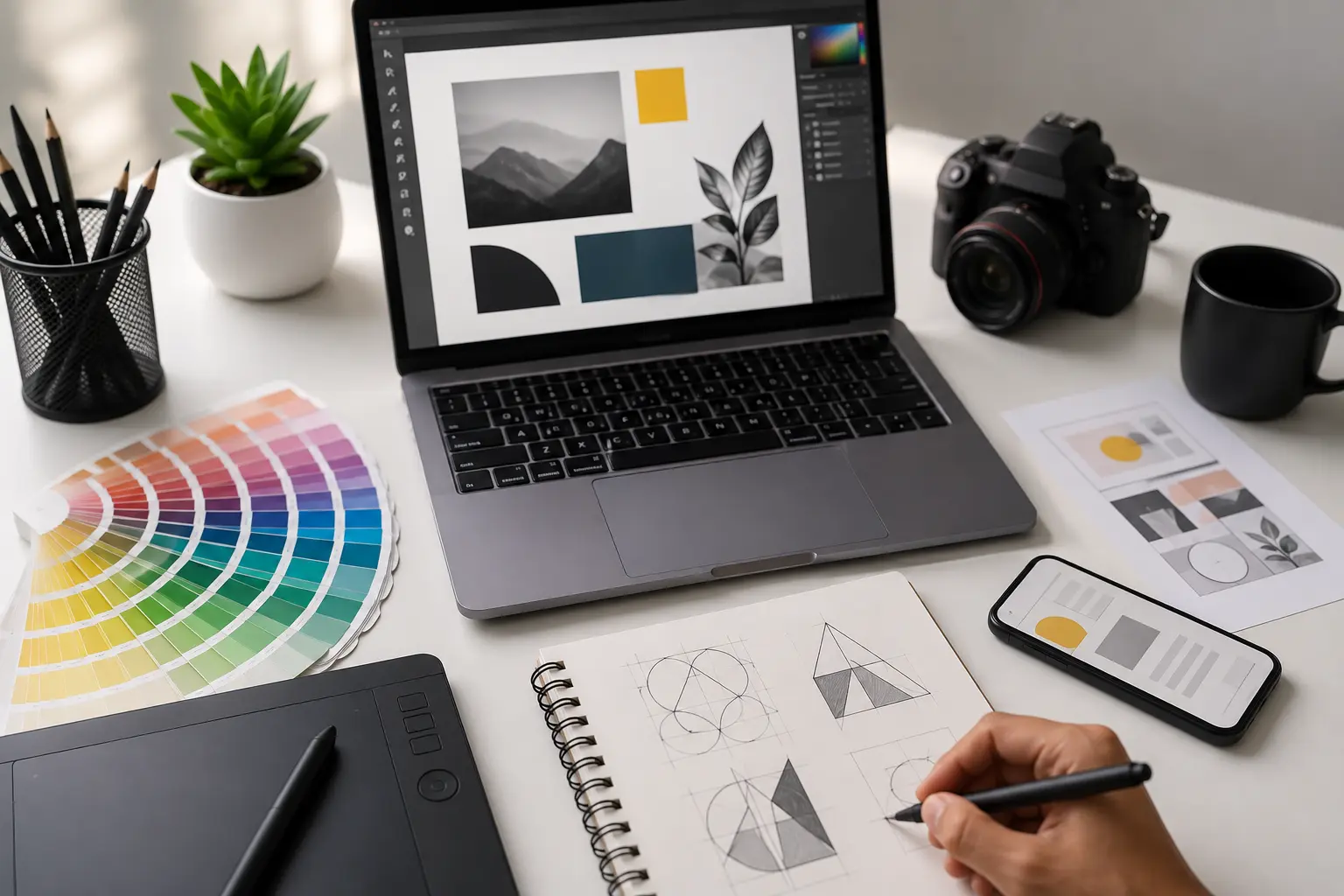
Graphic design is an art and communication process that includes visual communication, design principles, and visual elements. It conveys information, solves problems, and influences audience perception. It also gives ideas a clear visual form that people understand quickly and remember more easily.
Graphic design applies design principles to organize information and create clear visual compositions. It also adapts those principles across different graphic design types, including branding, print design, web design, User Interface/User Experience (UI/UX) design, and motion graphics. Each type applies the same design foundation to meet different communication goals.
Graphic design relies on visual elements such as colour, typography, imagery, and space to create clear, consistent, and meaningful messages. According to the American Institute of Graphic Arts (AIGA), 75% of designers use Artificial Intelligence (AI) tools in their workflow, up from 35% in 2023, which reflects the field's rapid evolution.
Graphic design supports practical applications across branding, marketing, packaging, and digital products. Together, its principles, types, and visual elements strengthen audience engagement by helping people understand, trust, and respond to visual messages.
What is graphic design?
Graphic design is the practice of visual communication that uses visual content and textual content to communicate clear ideas. It helps people understand information, solve problems, and make decisions through purposeful design.
Graphic design uses typography and imagery to organize information and deliver a clear audience message. These elements work together to improve recognition, understanding, and recall across digital and print media.
According to the Nielsen Norman Group (NN/g), users form a first visual impression in about 50 milliseconds, which shows how quickly design shapes perception. This finding highlights the value of clear visual communication before people read the supporting text.
Why is graphic design important?
Graphic design is important because it transforms visual communication into clear messages that support business goals and user needs. It strengthens brand recognition, builds trust and credibility, creates a competitive advantage and improves the user experience. Together, these benefits increase audience engagement and help people understand, remember and respond to visual content.
The importance of graphic design is listed below.
Fast communication: Fast communication presents complex information through clear visuals that people understand faster than text alone.
Brand identity: Brand identity strengthens brand recognition through consistent logos, colors, and typography.
Trust and credibility: Trust and credibility increase when clear and consistent design reflects professionalism and reliability.
Competitive edge: Competitive edge helps businesses stand out. Adobe reports that design-led companies more often achieve best-in-class digital experiences than their competitors.
Better user experience: Better user experience guides people through content with clear layouts and stronger audience engagement.
What is the purpose of graphic design?
The purpose of graphic design is to transform ideas into visual communication that informs people, strengthens brand identity and delivers a clear audience message. It organizes visual elements to support information sharing and help people understand content quickly. It also uses visual hierarchy to direct attention toward the most important information.
The purpose of graphic design is listed below.
Build brand identity: Build brand identity through consistent colours, typography and logos that people recognize and remember.
Share information: Share information by organizing text and imagery into clear and easy-to-understand visual content.
Guide the eye: Guide the eye through visual hierarchy that directs attention to key content.
What are the core principles of graphic design?
The core principles of graphic design are foundational guidelines that organize visual elements into clear and effective compositions. They apply balance, contrast, alignment, hierarchy, repetition and white space to improve visual communication, organize information and guide audience attention. Together, these principles create designs that look consistent, communicate clearly and support better understanding.
The core principles of graphic design are listed below.
Balance: Balance distributes visual weight to create stable and harmonious compositions.
Contrast: Contrast highlights important elements and improves visual distinction.
Alignment: Alignment organizes visual elements into clear and consistent layouts.
Hierarchy: Hierarchy directs attention to the most important content first.
Repetition: Repetition reinforces consistency through recurring colours, typography and visual patterns.
Proximity: Proximity groups related elements to show clear relationships and improve understanding.
White space: White space creates room around visual elements and improves readability.
What are the essential elements of graphic design?
The essential elements of graphic design are the fundamental visual components that create clear and effective visual composition. They combine line, color, shape, space, texture, value and typography to organize information, communicate ideas and strengthen visual communication. Together, these elements create designs that look balanced, remain easy to understand and deliver clear messages.
The essential elements of graphic design are listed below.
Line: Line connects points, defines boundaries and guides visual movement.
Color: Color creates emphasis, expresses emotion and strengthens visual meaning.
Shape: Shape forms enclosed areas that build icons, symbols and graphic objects.
Space: Space separates visual elements and improves clarity through balanced layouts.
Texture: Texture adds visual depth and creates the impression of surface quality.
Value: Value controls lightness and darkness to strengthen contrast and visual hierarchy.
Typography: Typography organizes text, improves readability and supports clear communication.
What are the main types of graphic design?
The main types of graphic design are specialized fields that apply visual communication to different industries, audiences and media. They include visual identity design, marketing and advertising, User Interface/User Experience (UI/UX), publication design, packaging design, motion graphics and environmental design. Each type serves a distinct communication purpose while using the same design foundation to solve different visual challenges.
The main types of graphic design are listed below.
Visual Identity Design: Visual identity design creates logos, colour systems and brand guidelines that define a consistent brand image.
Marketing & Advertising: Marketing and advertising create promotional visuals that support campaigns, products and services.
User Interface (UI/UX): User Interface (UI/UX) design improves the appearance, structure and usability of websites and applications.
Publication Design: Publication design organizes text and images into clear layouts for books, magazines and reports.
Packaging Design: Packaging design combines graphics and structure to communicate product information and strengthen brand presence.
Motion Graphics: Motion graphics animate visual elements to explain ideas and create engaging digital experiences.
Environmental Design: Environmental design applies graphics to physical spaces through signage, navigation systems and wayfinding.
How does graphic design support visual communication?
Graphic design supports visual communication through organize information into a clear message that people understand quickly and accurately. It uses visual hierarchy, color psychology, typography and whitespace to guide attention, improve readability and strengthen message clarity.
The ways graphic design supports visual communication are listed below.
Visual Hierarchy: Visual hierarchy arranges content by importance and guides attention through a logical reading path.
Colour Psychology: Colour psychology uses colour to communicate meaning, create emphasis and influence emotional response.
Typography: Typography improves readability, supports tone and strengthens message clarity.
Whitespace: Whitespace separates visual elements, reduces clutter and improves content comprehension.
What makes graphic design effective?
Effective graphic design depends on visual hierarchy, contrast, white space, alignment, typography, color and imagery that work together to communicate a clear message. These elements organize information, guide attention and improve readability through purposeful visual organization. Together, they create visual experiences that people understand quickly and remember more easily.
The factors that make graphic design effective are listed below.
Visual Hierarchy: Visual hierarchy organizes content by importance and guides attention through a logical reading order.
Contrast: Contrast separates visual elements and highlights important content.
White Space: White space reduces clutter and improves readability through balanced spacing.
Alignment: Alignment arranges related elements into a clear and consistent layout.
Typography: Typography improves readability and reinforces the intended tone and message.
Color: Color creates emphasis, communicates meaning and supports visual consistency.
Imagery: Imagery explains ideas visually and adds context that strengthens communication.
What are the best practices for graphic design?
The best practices for graphic design are visual hierarchy, limited fonts, strong contrast, white space, consistent branding and accessible design. These practices organize information, improve readability and strengthen visual communication across print and digital media. Together, they create clear layouts, reinforce consistency and help every audience understand visual content with confidence.
The best practices for graphic design are listed below.
Build Visual Hierarchy: Build visual hierarchy through size, placement and emphasis that direct attention to important information.
Limit Your Fonts: Limit your fonts to improve readability and maintain visual consistency.
Use Strong Contrast: Use strong contrast to separate visual elements and improve visibility.
Embrace White Space: Embrace white space to reduce clutter and strengthen content focus.
Keep Branding Uniform: Keep branding uniform to reinforce recognition across different media.
Design for Accessibility: Design for accessibility to support clear communication for more people.
What is graphic design used for?
Graphic design helps organizations create brand identity, support product promotion, improve product packaging and develop effective web and app interfaces. It organizes information, solves communication problems and connects audiences with products, services and digital experiences.
The common uses of graphic design are listed below.
Branding: Branding creates a recognizable identity through logos, colours, typography and visual systems.
Marketing: Marketing promotes products, services and campaigns through advertisements, social media graphics and promotional materials.
Packaging: Packaging communicates product information, protects products and attracts customer attention.
Web and App Design: Web and app design organizes layouts, interfaces, icons and illustrations that improve digital experiences.
How does graphic design support brand identity?
Graphic design strengthens brand identity through consistent visual elements that reflect brand values and build recognition. It uses logos to define identity, colors to create associations, fonts to express personality and images to reinforce memory. Website design extends these elements across digital experiences, so every customer touchpoint presents a consistent and recognizable brand.
Why does marketing rely on graphic design?
Marketing relies on graphic design because it turns brand messages into clear visual communication that influences consumer decisions. It strengthens brand recognition, builds trust and credibility and helps people recognize brands more easily. Mobile app design applies the same visual principles through clear interfaces that capture attention, reinforce brand meaning and encourage user action.
How does graphic design improve digital products?
Graphic design improves digital products through clear visual communication that helps people understand, navigate and use digital interfaces with confidence. It uses visual hierarchy to direct attention, interface design to organize content and consistent design to improve usability across websites, mobile apps and software platforms.
Why does print media use graphic design?
Print media uses graphic design because it attracts attention, organizes information and communicates messages with clarity. It uses typography to establish reading order, layout to group related content and visual balance to connect images with text. These elements help people understand and remember printed information more easily.
How does packaging use graphic design?
Packaging uses graphic design through color, typography, imagery and layout that communicate product information and strengthen brand identity. These visual elements organize essential details, express product qualities and influence purchasing decisions. Together, they help shoppers recognize products and compare options with confidence.
.svg)
.svg)
.svg)
.svg)